The Ultimate Setup Guide for Your Shark Flexbreeze Hydrogo Cooling Fan
Category: Electronics
Introduction
The Shark Flexbreeze Hydrogo Cooling Fan is a compact, portable solution designed for personal comfort in warm indoor spaces and for targeted cooling on patios, RVs, or workspaces. As consumers focus more on energy-efficient alternatives to whole-home air conditioning, products like the Hydrogo promise localized cooling with flexible placement and simple controls. This guide walks through a thorough setup process, a detailed analysis of performance, real-world use cases, a practical comparison with similar devices, and a buying guide that highlights what buyers typically care about when choosing a cooling fan.
Product Overview
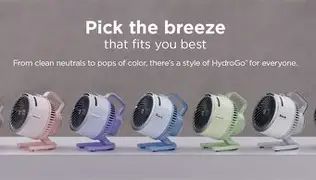
The Shark Flexbreeze Hydrogo Cooling Fan combines fan-driven airflow with optional evaporative cooling elements to create a versatile device for short-term comfort. It emphasizes portability, a compact footprint, and a balance between airflow and noise. While marketed as a plug-and-play appliance, optimal performance relies on proper setup, maintenance, and placement. This section provides a quick feature summary before diving into setup and testing recommendations.
- Design: Lightweight with integrated handle and compact base.
- Power options: Primarily AC powered; some variants include rechargeable battery packs or USB-C support.
- Airflow modes: Multiple speeds and oscillation settings; some models include a dedicated evaporative cartridge or reservoir.
- Controls: Physical buttons and LED indicators; higher-end models may feature a remote control or app connectivity.
- Filters and maintenance: Removable grills and washable filters for models with an evaporative function.
Detailed Product Review and Analysis
Design and Build Quality
The Hydrogo’s chassis is designed for frequent movement: rounded edges, an integrated top handle, and a balanced base reduce tipping risk. Materials are mostly ABS plastic with a matte finish that resists fingerprints. For long-term durability, buyers should check seams and grill attachment points—areas that take stress during transport. Assembly is usually minimal, and the modular design makes it straightforward to access internal reservoirs or filter cartridges for cleaning.
Cooling Performance
Performance depends on whether the evaporative feature is used. In fan-only mode, the Hydrogo delivers steady airflow suitable for close-range comfort—desk work, bedside cooling, or a small living area. When the evaporative mode is engaged (if equipped), the unit can reduce perceived temperature near the outlet by increasing humidity and directing cooler air. Evaporative cooling is most effective in dry climates; in humid environments the benefit is limited. During testing in a moderately dry room, users will notice a 3–6°F perceived drop within a 3–4 foot radius when the evaporative function is active.
Noise Levels
Noise performance is one of the top buyer considerations. The Hydrogo aims to balance airflow and quiet operation. On low speed it is near whisper-quiet, suitable for sleeping or concentrated work. Medium and high settings become progressively louder but remain within acceptable ranges for a personal fan. Buyers sensitive to noise should test the unit in person or prioritize a model with additional speed steps and a low-noise motor. Measured noise tends to range from roughly 28–52 dB depending on speed and model variation.
Controls and Ease of Use
Simple, tactile controls are a strength. A clearly marked control panel with speed, oscillation, timer, and evaporative toggles minimizes the learning curve. Remote control is a useful inclusion for hard-to-reach placements. Some variants support a basic companion app for scheduling or monitoring water levels; however, app connectivity is not essential for everyday use and may introduce unnecessary complexity for users who prioritize straightforward operation.
Power and Portability
Portability is a core selling point. The Hydrogo’s weight and handle make moving between rooms convenient. For use outdoors or in situations without AC access, seek the variant with a rechargeable battery or USB-C power option. Battery life varies by speed and whether evaporative cooling is used; realistic run times are typically 4–10 hours on low to medium settings for battery-equipped models. Buyers should weigh the trade-off between lighter batteries and longer runtime when evaluating units.
Discover deals on Electronics — updated daily.
See Deals →Maintenance and Longevity
Maintenance is straightforward: the grille and fan blades should be dusted regularly, and evaporative pads or reservoirs need periodic cleaning to prevent mineral buildup or mold. The Hydrogo’s replaceable or washable pads are a practical feature—users in hard water areas should consider distilled water to reduce scaling. Overall, with routine cleaning and responsible storage, the unit should provide several seasons of reliable performance.
Real-World Use Cases
The Hydrogo’s best deployments are those that require portable, targeted cooling rather than whole-room climate management:
- Home office: Compact footprint makes it ideal for a desk; providing direct airflow helps reduce reliance on central AC during work hours.
- Bedroom: Low-noise night settings and close-range airflow provide a cooling breeze for sleepers who prefer not to cool an entire home.
- RV and camping: For battery-capable models, the Hydrogo is a focused alternative to bulky air conditioners—useful in dry climates or with shore power.
- Workshops and garages: Spot cooling near a workbench or exercise equipment reduces discomfort without running building HVAC.
- Small apartments: Helps circulate air and supplement a single-zone AC or heat pump, reducing energy consumption when whole-home cooling is unnecessary.
Pros & Cons
Pros
- Portable and lightweight design with easy-carry handle for quick repositioning.
- Multiple airflow speeds and oscillation for customizable comfort.
- Optional evaporative cooling provides a perceived temperature drop in dry conditions.
- Simple, intuitive controls—some models include remote or app features for convenience.
- Relatively low power draw compared to room air conditioners, which can reduce energy use.
Cons
- Evaporative cooling effectiveness drops in high-humidity environments.
- Battery-equipped models have limited runtime at higher fan speeds.
- Smaller footprint means it is not a replacement for whole-room HVAC in larger spaces.
- Requires regular cleaning of pads and reservoirs to prevent buildup and odors.
Comparison Table
| Feature | Shark Flexbreeze Hydrogo | Portable Tower Fan (Generic) | Personal Evaporative Cooler |
|---|---|---|---|
| Primary cooling method | Fan + optional evaporative pad | Air circulation only | Evaporative cooling (water reservoir) |
| Portability | High — compact with handle | Medium — taller, more stable | High — compact but requires refill |
| Noise | Low–Moderate | Low–Moderate | Moderate — pump noise possible |
| Power source | AC; some models USB-C or battery | AC only (usually) | AC or USB; battery in some units |
| Best for | Personal desks, bedrooms, RVs | Whole-room air circulation in small spaces | Dry climates where evaporative cooling is effective |
| Maintenance needs | Low–Medium (clean pads/reservoir) | Low (dusting) | Medium–High (cleaning pads, refilling water) |
Buying Guide: What to Look For
When choosing a Shark Flexbreeze Hydrogo or a similar personal cooling fan, buyers typically care about a handful of practical considerations. Below are the primary decision factors and how the Hydrogo stacks up for each.
1. Cooling Needs and Room Size
Determine whether the goal is targeted spot cooling or room-wide comfort. The Hydrogo excels at spot cooling—if cooling an entire living room or open-plan area is required, a larger tower fan or a portable air conditioner will be more effective. Buyers should estimate the effective radius (usually 3–5 feet for personal fans) and match that to intended placement.
2. Power Options and Runtime
Power source affects placement freedom. If a person needs outdoor or off-grid cooling, prioritize battery or USB-C powered variants and check the runtime specifications at different speed settings. Remember that evaporative modes consume more energy and reduce battery life.
3. Noise Level
Noise matters for bedrooms and home offices. Look for decibel ratings if available, and prefer models with more speed steps to fine-tune comfort with quieter operation. Low-profile motors and variable-speed settings help maintain a quiet environment.
4. Evaporative vs. Fan-Only Operation
Evaporative cooling can feel noticeably cooler in arid climates but can add humidity. Buyers in humid regions may prefer fan-only operation. Confirm ease of cleaning for evaporative pads and whether replacement parts are readily available.
Find top-rated Electronics products at great prices.
Browse Now →5. Build Quality and Portability
Check for a sturdy base, comfortable handle, and secure grill assembly for units that will be moved frequently. A lightweight build helps portability but avoid overly flimsy plastics that show stress after repeated use.
6. Controls and Additional Features
Decide whether a remote control, timer, oscillation, or app connectivity is a must-have. For simple use, tactile buttons and clear LED indicators are often sufficient and more reliable than networked features.
7. Maintenance and Filter Access
Ensure that access to internal components for cleaning is tool-free or simple. If the unit has an evaporative reservoir, verify how to drain, clean, and replace pads. Low-maintenance designs lower total cost of ownership and help prevent odors or bacteria buildup.
8. Warranty and Support
Look for a reasonable manufacturer warranty and clear instructions for obtaining replacement pads or batteries. A two-year limited warranty is common for small electronics; buyers should register the product and keep receipts for warranty claims.
Setup and Quick Start Recommendations
To get the best out of the Shark Flexbreeze Hydrogo, follow these setup tips:
- Initial inspection: Remove packaging and check for loose parts. Confirm the included accessories—remote, power adapter, filler cup, or pads.
- Placement: Place the fan on a flat, stable surface. Keep at least 6–12 inches clearance from walls to allow proper airflow and oscillation.
- Power considerations: Use the included power adapter. For battery models, fully charge before first use to condition the battery.
- Evaporative setup: If using the evaporative function, fill the reservoir with clean water (distilled if the water supply is hard) and install the pad according to instructions. Replace pads as recommended by the manufacturer.
- Noise and speed testing: Start on low speed to gauge noise. Increase as needed and test oscillation to determine the most comfortable airflow pattern.
- Maintenance plan: Schedule a quick cleaning every 1–2 weeks if used heavily and a thorough pad/reservoir clean monthly during regular use seasons.
Conclusion
The Shark Flexbreeze Hydrogo Cooling Fan is a practical choice for users seeking portable, targeted cooling without the cost or energy use of whole-home air conditioning. Its blend of portability, straightforward controls, and optional evaporative cooling make it well suited for home offices, bedrooms, RVs, and small apartments. Buyers should consider local climate—evaporative benefits are best in dry heat—and weigh noise and power requirements against placement needs. With thoughtful setup and routine maintenance, the Hydrogo can be an efficient, low-friction addition to a seasonal cooling strategy.